
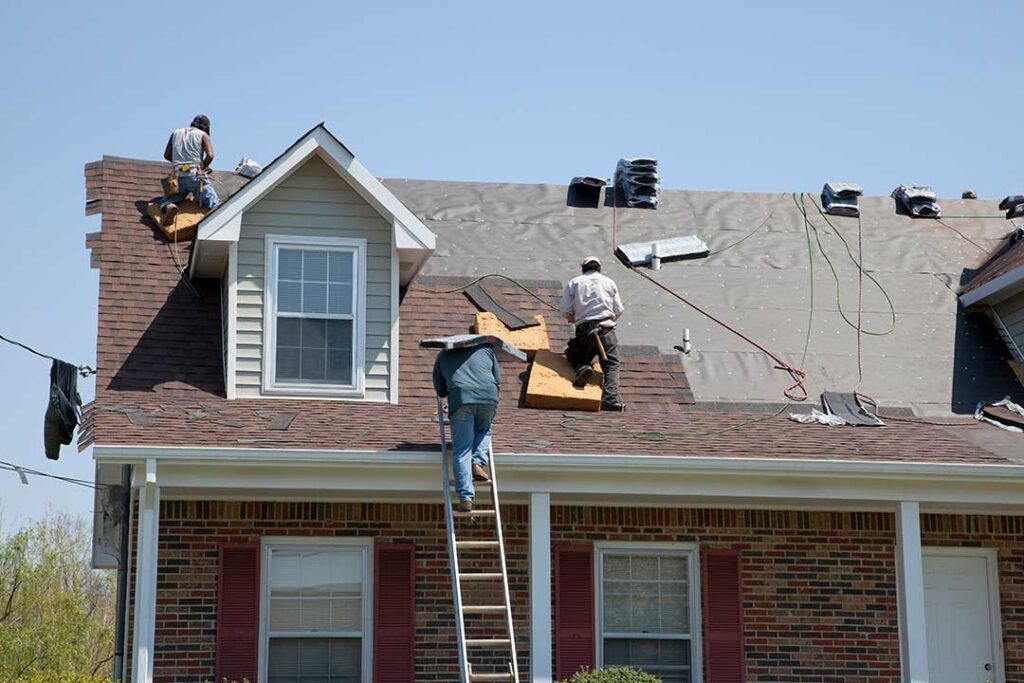
Removing leaves, branches, pine needles, and other debris from a roof can help protect shingles, flashing, gutters, and drainage paths. The safest approach depends on the type of debris, the roof’s slope, the weather, and whether the material is wet, heavy, sharp, or close to electrical equipment.
What counts as roof debris?
Roof debris includes any material that does not belong on the roof surface or inside the drainage system. Common examples include:
- Fallen leaves and pine needles
- Small branches and twigs
- Seed pods, blossoms, and windblown litter
- Moss, accumulated dirt, or loose granules
- Ice-related debris after winter storms
- Animal nesting material
- Material left behind after nearby tree trimming or roof work
In Webster, seasonal debris is often most noticeable in autumn and after windy weather. Snow, freezing temperatures, and repeated thawing can also press organic material into shingles and gutters, making it harder to remove safely.
Should homeowners remove roof debris themselves?
Homeowners may be able to remove light debris from a low-slope roof or from the edge of a roof using ground-based tools. Walking on the roof is much riskier, especially when shingles are wet, icy, moss-covered, steep, or brittle.
A simple rule is to avoid climbing if the debris can be reached safely from the ground or from a properly positioned ladder. Roof work should not be attempted during rain, frost, snow, strong wind, or any condition that makes footing uncertain.
Extra caution is needed when:
- The roof is steep or more than one story above ground
- The surface is wet, icy, or covered with moss
- A branch has punctured the roof
- Debris is tangled around wires, antennas, vents, or equipment
- The roof has damaged, curling, cracked, or missing shingles
- The person performing the work is not comfortable using a ladder
Safety equipment does not eliminate fall risk. A harness, ladder stabilizer, and other equipment must be used correctly to be effective.
How can light debris be removed from the ground?
For light leaves and loose twigs, a roof rake with a long handle may work from the ground. Use a tool designed for roof surfaces rather than a rigid garden rake, which can scrape away protective granules or catch on shingle edges.
Work slowly from the roof edge upward. Avoid pulling forcefully against shingles, flashing, vents, or gutters. The goal is to lift loose material away, not to scrape the surface clean.
A few practical guidelines help reduce damage:
- Use gentle strokes rather than repeated aggressive dragging.
- Do not pull branches across shingles.
- Stop if the tool catches on flashing, vent pipes, or fasteners.
- Keep debris from sliding onto people, vehicles, windows, or walkways.
- Do not use a pressure washer on asphalt shingles.
- Avoid leaf blowers when debris could be blown beneath shingles or into attic vents.
A roof rake can remove loose material, but it may not reach valleys, areas behind chimneys, or sections blocked by roof geometry. Those areas should not be reached by leaning dangerously from a ladder.
What is the safest way to remove branches?
Small branches should be removed by hand only when they are loose, lightweight, and reachable without climbing onto the roof. Wear gloves because broken limbs may have sharp ends, nails, or hidden insects.
Do not yank on a branch that is lodged beneath a shingle or wrapped around a roof component. Pulling can dislodge shingles or enlarge a puncture. If a branch is heavy, suspended, partially broken, or resting on electrical lines, keep clear and arrange for appropriate hazardous-tree or electrical assistance.
After a branch is removed, inspect the area from the ground or from a safe vantage point. Look for:
- Torn or missing shingles
- Exposed underlayment
- Dents or cracks in metal flashing
- Damaged vent covers
- Sagging roof sections
- Water stains on ceilings or upper walls
A small branch can cause a leak even when the visible damage appears minor.
How should debris be cleared from gutters and valleys?
Gutters and roof valleys collect more debris than open roof sections. Leaves and pine needles can form dense mats that block water, especially after rain.
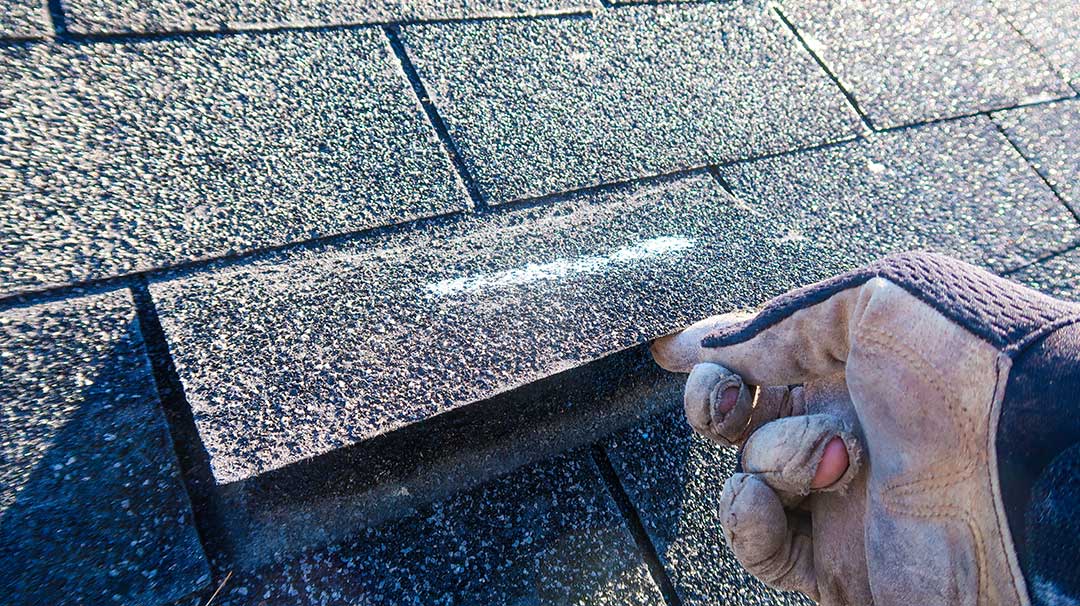
Gutter cleaning should be performed from a stable ladder positioned on firm, level ground. Never place a ladder directly against a gutter, and do not stand on the top step. If the gutter is difficult to reach, ground-based tools may be safer than stretching sideways.
Roof valleys require particular care because water concentrates there. Debris should be lifted rather than scraped across the valley surface. Be cautious around valley flashing, which can be bent or punctured. If material has become packed under shingles, removing it may require more than ordinary cleaning.
After clearing a gutter, run a small amount of water through it if conditions are safe. This can reveal blockages at the outlet or downspout. Water should drain freely without spilling over the front edge or backing up beneath the roof edge.
Can moss, dirt, and algae be swept away?
Loose dirt and a small amount of surface debris may be removed gently, but moss should not be aggressively scraped from shingles. Moss can grow beneath shingle edges, and forceful removal may strip granules or tear the roofing material.
Algae staining is usually a cosmetic issue rather than loose debris. Scrubbing or pressure washing can shorten shingle life. If the roof surface is heavily covered, slippery, or deteriorated, walking on it creates additional risk.
Do not apply household chemicals or improvised cleaning solutions without confirming that they are compatible with the roofing material and nearby plants, siding, gutters, and water drainage. Runoff from roof treatments can damage landscaping or enter stormwater systems.
What should be checked after debris removal?
Debris removal should be followed by a basic inspection. From the ground, use binoculars if needed and look along roof edges, valleys, penetrations, and areas beneath nearby trees.
Inside the attic or upper rooms, watch for:
- New water stains
- Damp insulation
- Musty odors
- Dripping after rain
- Daylight visible through the roof deck
- Peeling paint near ceilings or upper walls
Granules in gutters can indicate normal aging, but a sudden large amount may point to shingle wear. Water pooling near the foundation may also indicate a blocked or disconnected downspout rather than a roof problem.
Documenting damage with photographs can help track changes over time, especially after windstorms or falling branches.
How often should roof debris be removed?
There is no universal schedule. Inspection is more useful after major wind, heavy rain, tree shedding, or a storm that drops branches on the property.
Many households benefit from checking the roof and gutters:
- In late autumn after most leaves have fallen
- In early spring after snow and ice have melted
- After strong winds or thunderstorms
- Before periods of heavy rain
- Whenever water begins overflowing from gutters
Properties with mature trees usually need more frequent observation than homes with little nearby vegetation. Keeping branches trimmed away from the roof can reduce debris, but tree work should also be handled cautiously because falling limbs can damage shingles and gutters.
When is debris removal no longer a routine task?
Debris removal becomes a safety or repair issue when the material is heavy, the roof is unstable, or damage is visible. Do not climb onto a roof after a storm if shingles are missing, the deck appears sagging, or a tree has landed on the structure.
Professional evaluation is appropriate when there is a fall hazard, electrical danger, structural damage, suspected leaking, or debris that cannot be removed without disturbing roofing materials. The priority is preventing additional injury or damage, not making the roof look perfectly clean.
In the local freeze-thaw climate, a small opening around a damaged shingle or flashing detail can allow water to enter, freeze, and widen the problem. Prompt attention is especially useful before another cycle of rain, snow, and freezing temperatures.
